Introduction
We all know that Earth is round and it revolves around the sun. Its revolution causes the seasons to change over time. Earth’s rotation on its own axis causes day and night. But would you believe if I tell you that there are number of people around the world who don’t trust this simple fact. They believe that Earth is not round, but rather it’s flat. We call them flat-earthers.
Although this may seem an idiotic and foolish statement, a huge number of people literally think that the Earth is flat. According to a survey of 2021, almost 10% of Americans, mostly Gen Z and millennials, 3% of the UK population, 7% of Brazilians, and many others around the world believe in the flat Earth theory. Even a PhD student in Tunisia attempted to submit a thesis on the Earth being flat. So, when all this started, what was their logic behind this belief? Let’s dive deep into the history and beliefs of flat-earthers.
Historical Proofs of Earth as Globe
In around 500 BC, an ancient Greek philosopher, Pythagoras, looked at the sun and moon. Because they are round in shape, he imagined Earth as a globe. Aristotle also believed that Earth is round because he analysed the lunar eclipse and argued that Earth’s shadow on the moon is round, that’s why Earth must be round. He also predicted the round structure of the Earth when he observed the ships coming from a long distance. When they approached, their upper part would appear first, then their lower part. This was kind of proof of Earth’s curvature.
In 200 BC, Eratosthenes fixed two sticks in the ground at a distance of 800 km apart and noticed the slight difference in the shadows of both sticks. After some calculations, he came to the conclusion that the circumference of the Earth would be between 37,500 km and 50,000 km. Today, we know that the circumference of the Earth at the equator is 40,075 km. And in the 1600s, when Newton gave his law of Gravitational force, almost everyone believed in the round Earth.
Origin of the concept Flat Earth
In 1865, Samuel Rowbotham wrote a book by the name ‘Zetetic Astronomy: Earth not a globe’. In this book, he argues that when you go to sea, you see a flat horizon rather than a curved one. On land, you can see flat land for quite a distance, and the ground doesn’t bend. He argued that ‘believe what you see, which is the literal meaning of the word ‘Zetetic’
In 1938, he performed an experiment to prove that the curvature of the Earth doesn’t exist. He grabbed two boats. In one boat, he put a 3-foot white flag, and in the other boat, he sat with a telescope to observe. He sailed the boat with a flag in the Old Bedford River of the UK, which is straight for a long stretch. When he observed the boat from a distance of 6 miles, the flag was visible. He argued that if Earth had been round, the boat with the flag would have just disappeared. He also mentioned this observation in the book.
But in fact, Rowbotham didn’t see the flag. What he saw was the refraction of the flag, what we call the mirage of the ship. And, Earth is so vast that its curvature is difficult to observe with the eyes, so it looks straight at long distances.
This modern flat-earth idea became famous in the late 1800s. Another book by the name ‘One Hundred Proofs that the Earth is not a Globe’ was written by William Carpenter in 1885.
What actually do Flat-Earthers believe?
They believe that Earth is flat with the North Pole at the centre and there are large mountains of Antarctica at the end. And if you cross these mountains, you’ll just fall off the Earth. Although a few flat-earthers believe that these mountains of Antarctica are continuous and infinite, and you can’t cross them. They believe that the Earth is protected by a dome which they call ‘Firmament’. A book was also written on this dome in 2016 by the name ‘Firmament-Vaulted dome of the Earth.’ According to them, rockets launched by NASA and other space agencies are actually nuclear bombs that are trying to break that dome.
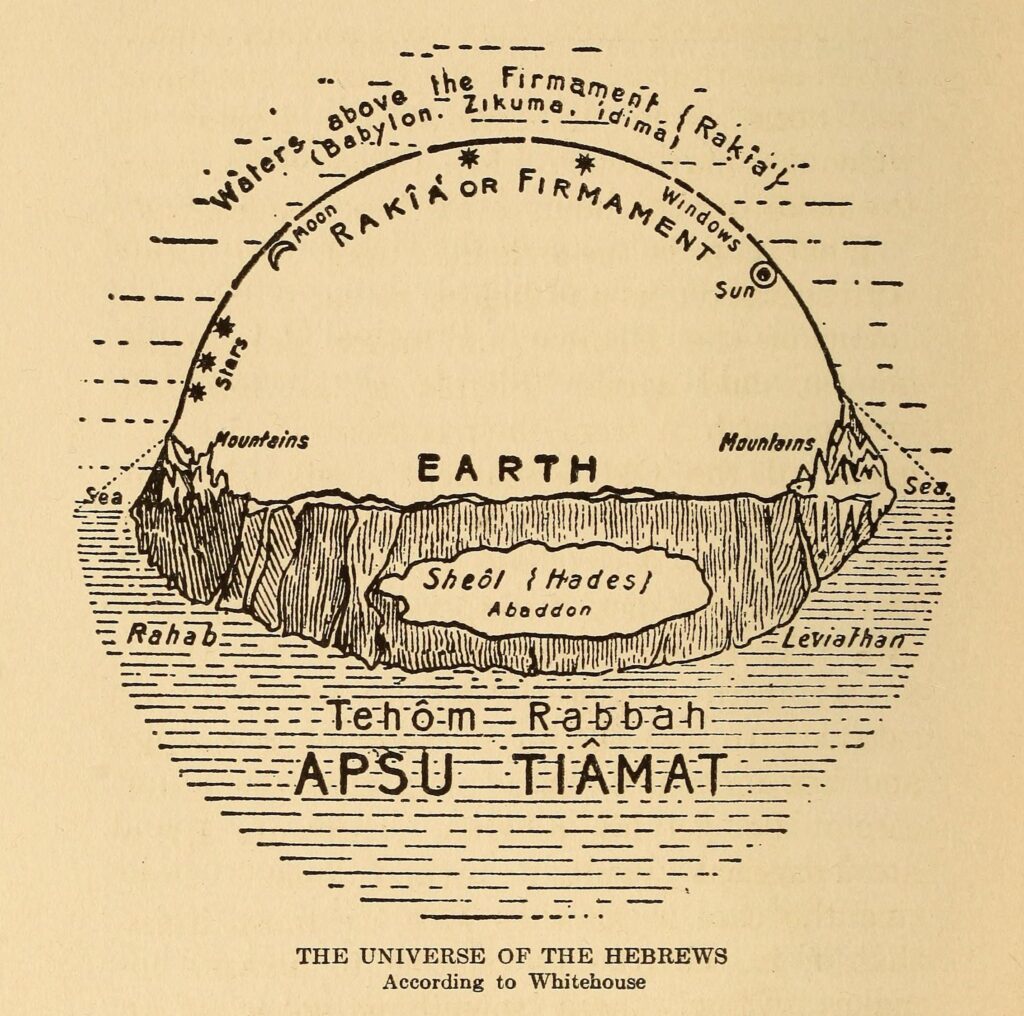
They believe that the sun and moon revolve around the Earth. The sunlight and moonlight act as a spotlight. Where sunlight falls, there is day in that area, and where moonlight falls, there is night. They believe that the sun and the moon are 50 km in diameter each, while they are 5500 km above the Earth. But in reality, the sun is 150 million km away, while the moon is 400,000 km away.
Mark Sargent, who is a recently prominent name in the flat Earth community, claims that sunlight is hot and moonlight is cold. The logic behind the claim is that the temperature inside a house is relatively lower than the temperature outside the house during the day; meanwhile, the temperature inside a house is relatively higher than the outside temperature at night.
By the way, an important pattern has been observed by the surveyors. Those who don’t believe in a round Earth also don’t believe in vaccines and moon landings. They claim vaccines contain microchips and the moon landing was fake.
Why do they believe in Flat-Earth?
Firstly, they believe it’s simple and easy. For them, it’s a convenient explanation. Secondly, this explanation or observation of the horizon of the sea not being flat looks correct at first sight, and people try to believe in their intuitions because sometimes they believe what their gut feelings say, even if they are wrong. Thirdly, they lack critical thinking. They need to question themselves and try to understand their observations and explanations from every single perspective. If Rowbotham had questioned himself and had tried to understand his experiment from other perspectives, he would have been able to reach a new conclusion other than a flat earth. Fourthly, they mistrust the authorities. Every picture and proof of Earth being round provided by NASA and other space agencies is of no use to them. For them, it looks like everyone is conspiring to hide the true and real shape of the Earth.
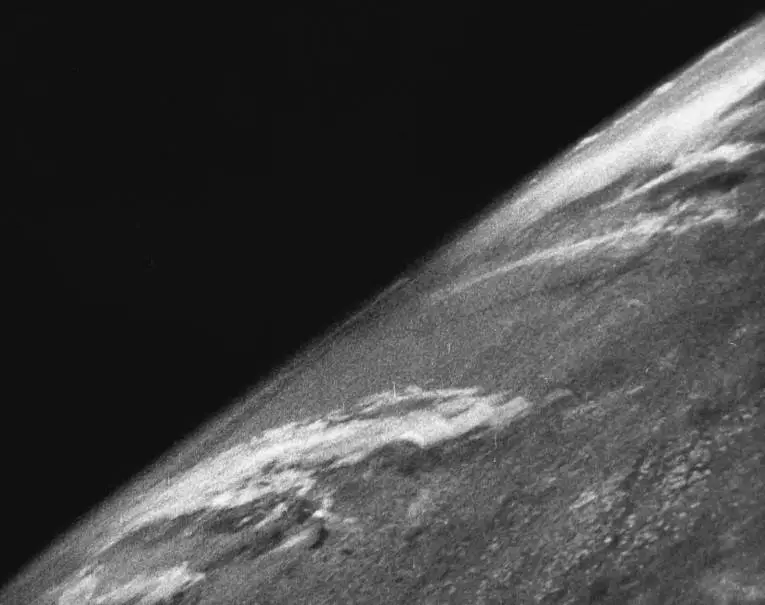
On October 24th, 1946, the first ever photo of the Earth was taken, and later photos revealed that Earth is a globe. This is a loud and clear proof driven explantion for all.