“That’s one small step for [a] man, one giant leap for mankind.” These iconic words, spoken by Neil Armstrong, continue to inspire everyone who is fascinated by space exploration and human progress. In 1969, Armstrong became the first human to set foot on the Moon—marking one of the greatest achievements in history.
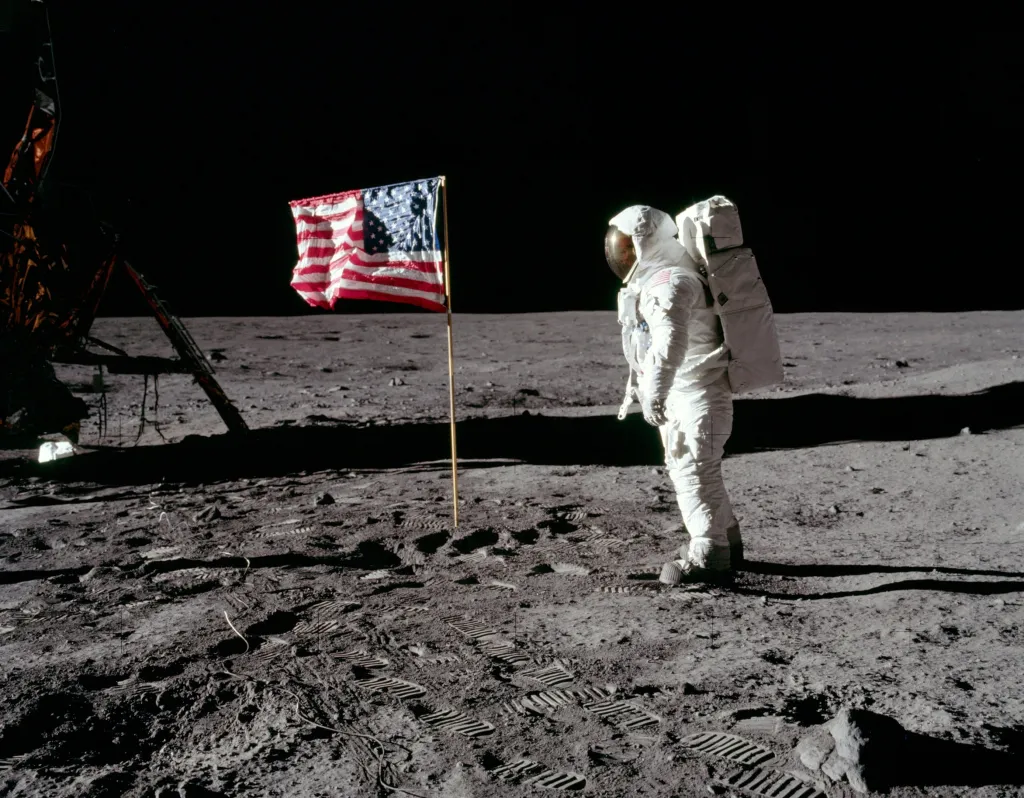
Apollo 11 was the first successful crewed mission to land on the Moon. The mission included:
- Commander Neil Armstrong
- Lunar Module Pilot Buzz Aldrin
- Command Module Pilot Michael Collins
The crew launched on July 16, 1969, from Kennedy Space Centre aboard the powerful Saturn V rocket. On July 20, 1969, the Lunar Module Eagle separated from the Command Module Columbia. Armstrong and Aldrin descended toward the Moon, while Collins remained in orbit above. During this time, Collins experienced a unique moment of isolation. As he orbited the far side of the Moon, he lost contact with Earth for about 40 minutes—surrounded by complete silence. Because of this, he is often called “the loneliest man in history.”
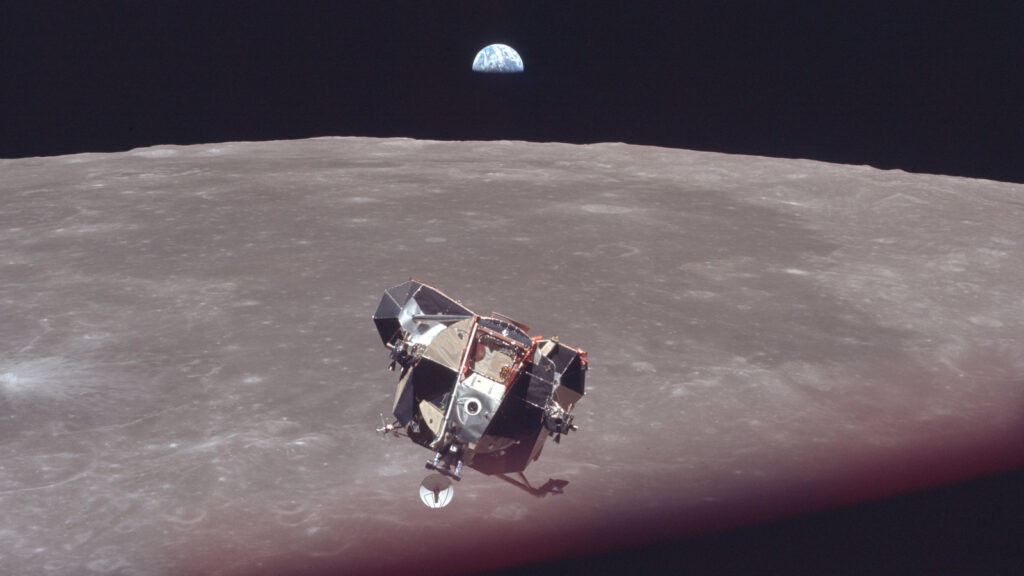
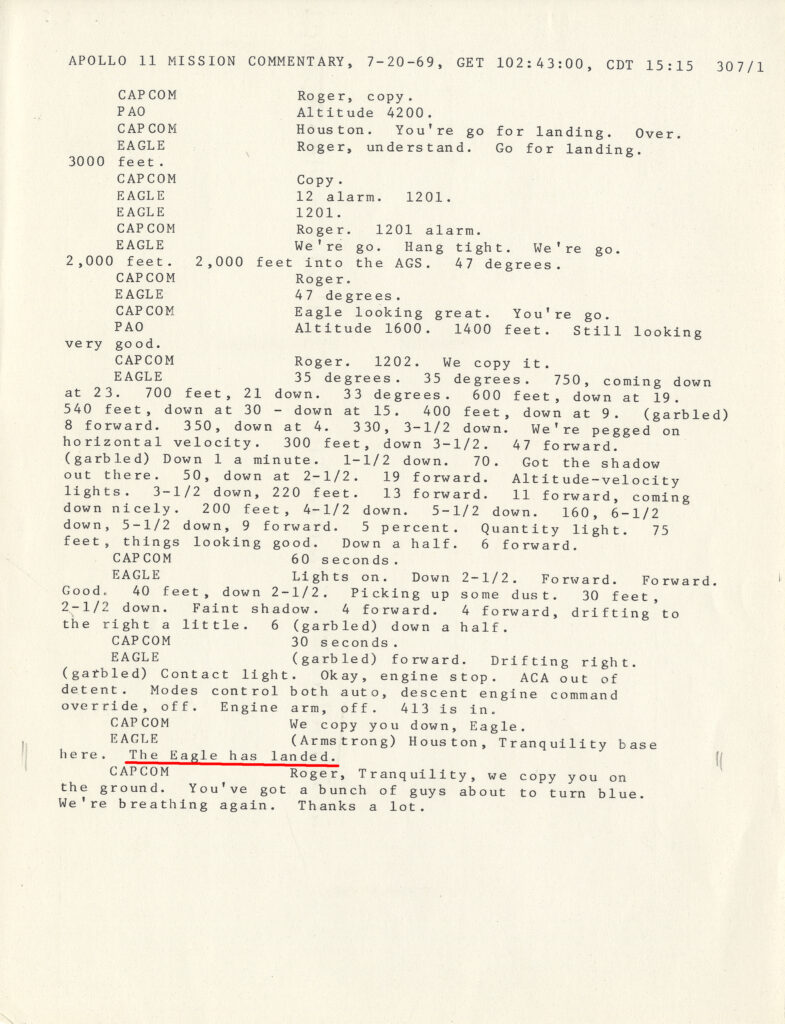
The Lunar Module Eagle successfully landed on the Moon on July 20, 1969. Shortly after landing, Neil Armstrong stepped onto the lunar surface and delivered his famous words:
“That’s one small step for [a] man, one giant leap for mankind.”
More than 600 million people around the world watched this historic moment live, making it one of the most significant events ever broadcast. Soon after, Buzz Aldrin joined him, and together they planted the United States flag on the Moon
Following their historic mission, the Apollo 11 astronauts—Neil Armstrong, Buzz Aldrin, and Michael Collins—splashed down safely in the Pacific Ocean on July 24, 1969. They were immediately placed in quarantine for 21 days inside a Mobile Quarantine Facility aboard the USS Hornet, and later at NASA’s Lunar Receiving Laboratory, to prevent any possible (though unlikely) contamination from lunar microorganisms.
The success of Apollo 11 fulfilled the vision of former U.S. President John F. Kennedy. In 1961, he challenged the nation by saying:
“We choose to go to the Moon… not because they are easy, but because they are hard.”
This mission proved that determination, innovation, and courage could achieve what once seemed impossible. During the mission, President Richard Nixon also spoke with the astronauts from the Oval Office, congratulating them on their success.
On the Moon, they left a commemorative plaque attached to the landing gear, which read:
“Here men from the planet Earth first set foot upon the Moon, July 1969 A.D. We came in peace for all mankind.”
They also left behind a silicon disc containing goodwill messages from 73 world leaders, a gold olive branch pin symbolising peace, and medals honoring Soviet cosmonauts Yuri Gagarin and Vladimir Komarov, as well as Apollo 1 astronauts Gus Grissom, Ed White, and Roger Chaffee. To reduce weight for the return trip, they also discarded tools, backpacks, and other equipment.
Pingback: Voyager 1: A messenger carrying the Fingerprints of Humanity - sciencegoats.com