Extinction was believed to be the complete disappearance of a particular species from the face of the Earth for good. When any organism went extinct, it meant that its one-of-a-kind genetic blueprint developed over many years of evolution disappeared from this world forever. Today things are getting different. Thanks to bio-technology and genetics, a notion of de-extinction has occurred, and there is a question to ask: do scientists still have to do this now when they manage to bring back to life what was dead long ago?
De-extinction, also known as resurrection biology, means something more complicated than just cloning dinosaurs, which you might see in movies; it is a sophisticated process of restoring extinct creatures or creating new organisms capable of fulfilling an extinct creature’s ecological function.
The Toolkit of Resurrection: How It Works
De-extinction does not involve magic. Instead, it relies on a suite of sophisticated genetic techniques. The most prominent methods include:
- Back-Breeding: This process entails breeding modern closely-related species selectively so that ancestral characteristics are increased. Through this form of artificial selection, which has been applied for generations by humans, scientists aim to “create” the original animal like the Aurochs by choosing those phenotypes which look like the ancestral species.
- Cloning: Where there is the availability of well-preserved samples of tissues or cells with intact DNA, then SCNT becomes possible. This process is used in the creation of Dolly the sheep. Nevertheless, because of the need for high-quality live material, the process cannot work for organisms that became extinct centuries ago.
- Genetic Engineering and CRISPR: And here lies the cutting edge of de-extinction technology. Through the application of CRISPR-Cas9, one can manipulate the DNA of the closest living relative of the extinct species in order to include certain key characteristics within its genome. An example would be the addition of genes for cold resistance, fur, and fatty deposits in the genome of an Asian elephant, thus creating a “mammoth-like” elephant that can survive in Arctic conditions.
Ecological Resurrection: More Than Just a Specimen
It is uncommon to find attempts at de-extinction that concentrate only on introducing the revived species to the zoo; rather, the aim is revival ecology.
These extinct species were part of the species category known as the “keystone species.” These are species which maintain the integrity of their ecosystem through biological processes. The extinction of these keystone species results in a domino effect in the collapse of biodiversity.
The Mammoth Steppe Example
The Woolly Mammoth revival program is perhaps the most well-known example of such attempts. Millions of years ago, there existed an immensely productive steppe that covered the entire northern hemisphere. It is assumed that the high productivity of the ecosystems could be guaranteed through the grazing and trampling effects of the large animals. Without them, the ecosystem would change to moss and become unproductive.
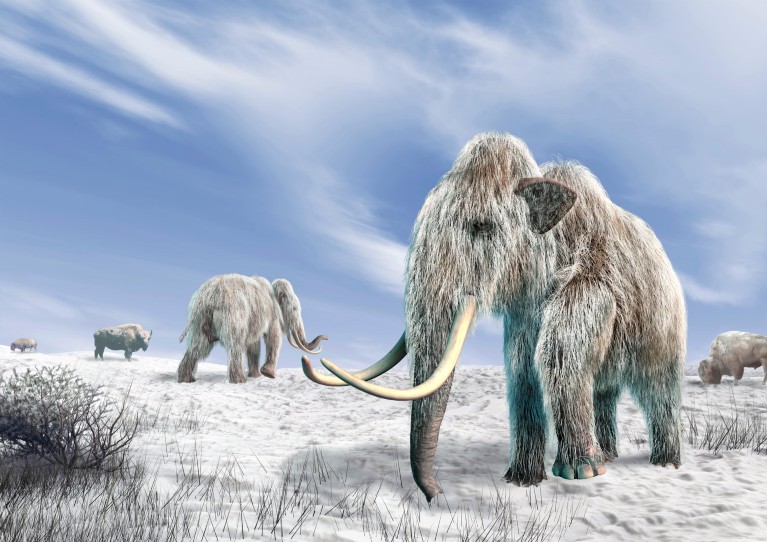
By reintroducing a mammoth proxy, proponents hope to:
- Grassland Restoration: Grazing animals destroy trees and make the snow harder, allowing cold air to penetrate the surface layer better.
- Climate Change Mitigation: As a result of converting tundra into grasslands, there will be less heat absorption by the soil during the summertime, thereby avoiding the thawing of permafrost and the emission of huge quantities of methane gas, a powerful greenhouse gas.
The Ethical and Philosophical Minefield
While the technological feasibility may be exciting, there is still much debate within the scientific community regarding the morality of resurrecting long extinct creatures.
The “Playing God” Problem
Among the criticisms made, one problem involves the possibility of introducing species into the environment which have been extinct for millions of years. Will the new species act in the same manner as their predecessors? Will they thrive alongside the current species, or will they be considered nuisance species?
Welfare Concerns
There is also the issue of the well-being of the animal. It could be that our manufactured hybrid elephant does not have the proper social organization, learned behavior, or bond between the mother and child to have a healthy existence. This is because the creation of an animal simply for an experiment does not seem morally right.
Distraction from Conservation
The most practical reason why de-extinction is not advisable can be termed as the argument that de-extinction diverts funding. There is not enough money for conservation biology research. The argument here is that spending millions of dollars on bringing back just a few mammoths or passenger pigeons will divert focus from what should really matter, which is ensuring that the already living endangered species do not go extinct.
Looking Forward: A Balanced Approach
Although de-extinction can not resolve the issue of loss of biodiversity on its own, de-extinction can become a totally new tool that humanity will have at their disposal, and this makes it extremely important. With our ability to edit nature, humans will be confronted with the fact that they play the role of stewards and caretakers of their planet. Therefore, they should use this power with wisdom.
What the future of de-extinction holds can be anything from using extinct species’ abilities to adapt to changes in climate to literally bringing back those species that went extinct. Whatever it would be, one thing is certain – it should help protect the environment rather than exploit it.
In conclusion, it should be mentioned that de-extinction can help us take conservation to another level, which means that it challenges us to go further. This question raises itself as to whether we can move beyond our efforts to conserve the living species to one of reviving what we have already lost through our actions.
With the rise of this new discipline, we ourselves have become part and parcel of the process of extinction in nature rather than mere observers.