For close to eighty years, a mystery has lingered at the peripheries of history books, military intelligence, and the nightly news programs on television: what exactly is flying overhead? The UFO file, which includes anything from classified government documents to the extensive documentation compiled by civilian experts in their research, constitutes one of the longest-standing mysteries of modern times. This is the tale of not only bizarre lights and saucer-like objects, but also one that is about the interplay between matters of national defense and humanity’s knowledge of science.
The Dawn of the Modern Phenomenon
Whereas descriptions of what came to be known as “celestial phenomena” are as old as written history and mythology, the current era of UFO sightings is generally believed to have started in June 1947 when Kenneth Arnold, a civilian pilot flying over Mt. Rainier in Washington state, reported nine unidentified aircraft shaped like crescents traveling at very high speeds. It was Arnold’s description of their motion, which he described as similar to skipping a saucer across the water, that gave rise to the popular term “flying saucers.”
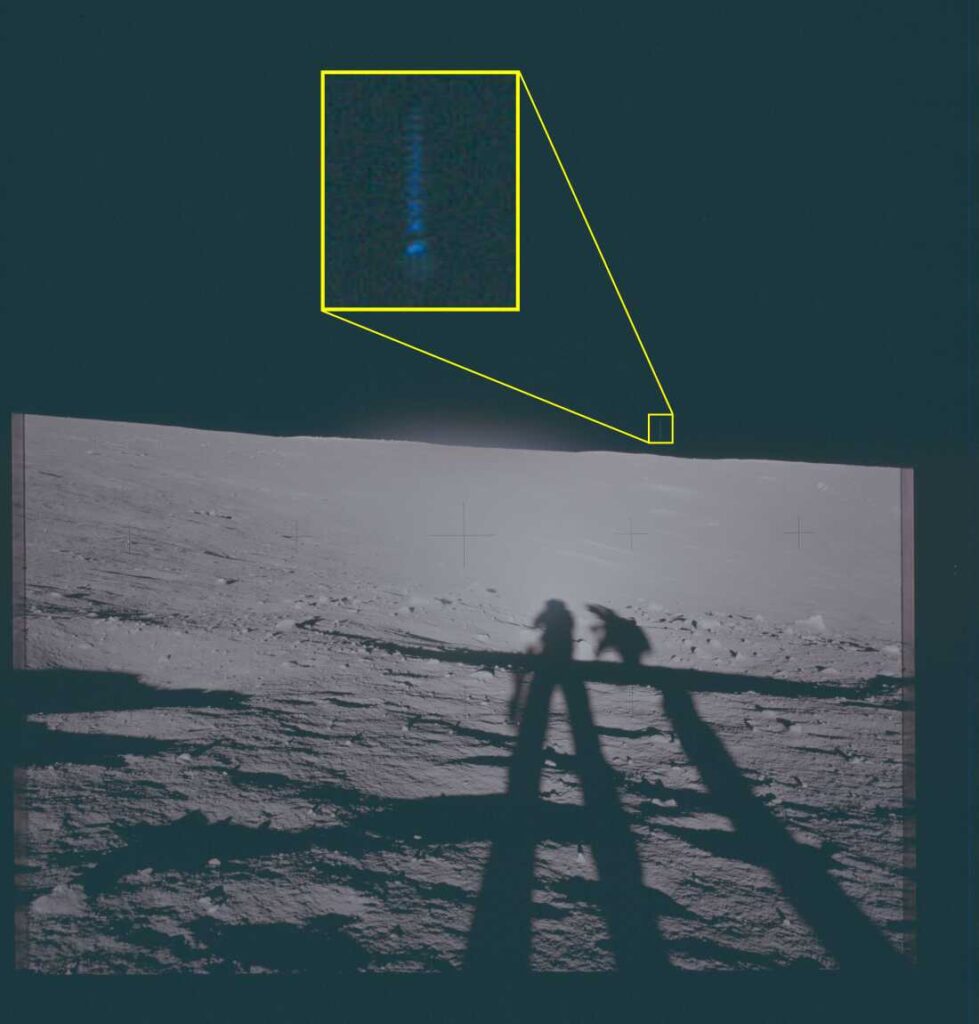
The result was instant folklore, and the skies were no longer the realm of merely the birds, clouds, and airplanes but rather the frontier of conjecture. With sightings coming from all around the country, the military was put in a quandary about how to explain this phenomenon scientifically, considering its apparent violation of the laws of aviation physics at the peak of the Cold War.
The Era of Official Investigations: Project Blue Book
In light of growing public concern and possible threats to the safety of American airspace, the United States Air Force carried out several investigations. Project Blue Book was one such project, conducted between 1952 and 1969. During the course of this project, 12,000 UFO sightings were documented by Blue Book.
Blue Book had two main aims: first, to assess whether UFO sightings threatened American national security, and second, to conduct scientific analysis of the information gathered. The conclusion arrived at by this project was that a vast majority of these sightings were nothing more than aircraft, weather balloons, astronomical events, and outright hoaxes, while a small fraction of cases involved radar sightings along with observations by military pilots, and these were described as “unidentified.”
While a large number of UFOs came to light during this period, the relationship between the general public and the government continued to deteriorate since the former thought that the military was withholding the truth. In spite of the numerous sightings, there was not enough physical evidence available since none of the UFOs had physically landed or been captured.
International Archives: Beyond the U.S.
The fascination with the UFO file is not restricted to America. Nations across the globe have opened their own archives, revealing a shared, international struggle to categorize the unknown:
- Canada: For over 45 years, the Canadian government collected over 15,000 pages of information relating to about 4,500 separate sightings. Just like the United States, they finally found out that the phenomenon was not open to any scientific research and investigation.
- New Zealand: In the past few decades, the New Zealand Defence Force has released many letters and communications concerning UFOs going all the way back to 1952. This collection of information gives insight into how military officials went about sorting out claims from civilians, reporters, and even radar operators.
- The Global Archive: From the “Condign” report released by the UK to parallel documents declassified in France and Brazil, the joint UFO files seem to indicate that these objects do not know what international boundaries mean.
The Science of the Unknown
The skepticism of scientists might be another issue in the way of “disclosure.” Scientists usually work with repeatable results and testable hypotheses. But the sighting of an unidentified flying object is rarely accompanied by the opportunity for collecting high-quality and accurate data due to the nature of its occurrence.
However, things are changing. In the new millennium, the phrase “unidentified flying object” has acquired a new name—UAP or Unidentified Anomalous Phenomena. The use of this term is aimed at making the issue more realistic and avoiding associations with “little green men.” Moreover, the discussion should focus on studying objects that can perform “trans-medium” movement, namely, moving through space, the atmosphere, and even the ocean with incredible speed exceeding anything that can currently be achieved by aerospace engineering.
It is worth mentioning that a known physicist, Avi Loeb, has pointed out several times that scientists should be curious instead of being skeptical when it comes to unusual things happening around us. When we come across something that contradicts the laws of physics known to us today, we should not immediately declare the issue a “dark” mystery and a possible hoax.
What Is Really in the Files?
If you were to leaf through the literal “UFO file” today, you would find a strange mix of documents:
- Radar Logs: Records showing objects making sudden, 90-degree turns at thousands of miles per hour—maneuvers that would turn a human pilot into a biological hazard due to G-forces.
- Pilot Testimony: Detailed accounts from highly trained military aviators who report objects hovering, accelerating, and disappearing without the use of wings, rotors, or visible propulsion systems.
- Bibliographies: Even the Library of Congress once compiled extensive annotated bibliographies to help researchers categorize the sheer volume of literature on the subject, confirming that the “UFO file” is as much a sociological record as it is a scientific one.
The Future of Disclosure
But now, looking ahead into the future, it becomes apparent that what prevents us from making further progress in researching UFOs is the lack of information rather than the lack of sightings. Indeed, now the need to make the disclosure comes from civilians’ activism in conjunction with courageous whistleblowers from the aerospace industry, together with new-age scientists unafraid of stigmatization due to their choice of research topics.
No matter whether the mystery of UFOs turns out to be trivial (the secret technology of humanity), existential (aliens), or something far more complicated and outlandish (multi-dimensional beings), the fact is that the UFO file is growing, rather than coming to an end. After all, UFOs serve as an important reminder that the world we live in is much larger and more complex than anything we have ever encountered before in our life.
Ultimately, the UFO file is less about alien craft and technologies than it is about human curiosity, our faith in the universe’s grandeur, and our ability to discover the mysteries of existence. In essence, it is a reflection of humanity as a whole, our thirst for knowledge, our confidence in the institutions of power, and the endless struggle to overcome the impossible.