For many years, the sea floor was thought of as a dead, barren wasteland—an unfriendly, cold desert under tremendous pressure. But through the study of modern-day oceanography, all previous preconceptions have been debunked. Oceanographers have come to find, through robotic submarines and the use of sophisticated sonar technology, that there exist spectacular formations even within the depths of the ocean floor—mountainous formations, abyssal plains filled with mysterious forms of life, and volcanoes emitting scalding hot chemicals.
However, while the world of science rushes to discover all of the wondrous and exotic forms of life in the ocean depths, there is also another kind of rush going on. This unique ecosystem’s existence has also resulted in the use of its resources in the form of precious minerals found within the ocean bed itself. Deep-sea mining, which was earlier just an idea, is today a reality.
1. The Wonders of the Deep: Recent Ocean-Floor Discoveries
In fact, we have a greater level of detail about the surface areas of Mars and the moon than we have about those of our oceans here on earth. However, even with such limited exploration of the depths of the oceans, we have made some truly incredible discoveries.
Hydrothermal Vents and Extremophiles
One of the most astounding revelations in oceanography took place with the discovery of hydrothermal vents, geothermal fumaroles created near tectonic fault lines, in which highly acidic mineral-rich water shoots out from inside the Earth’s surface. In contrast to what the researchers were expecting to discover, rather than barren wastelands,
they discovered a complete ecosystem thriving entirely without any influence from sunlight. Chemosynthesis is the foundation of the food chain, as it enables bacteria to use a chemical process whereby they derive energy from harmful substances like hydrogen sulfide.
Seamounts and Deep-Sea Coral Reefs
Seamounts refer to underwater extinct volcanoes that have formed underwater mountains thousands of meters high from the ocean’s floor. Seamounts cause deep ocean currents to rise, leading to nutrient influx into the shallow parts of the oceans. As a result, immense ecosystems are created that are made up of extremely old coral and glass sponge formations. Such ecosystems become a breeding ground for migratory fish and other marine lifeforms.
The Deep-Sea Biomedical Treasury
The extreme high pressure conditions in the deep sea have driven the evolution of special biochemical structures in living things. The scientific community has begun to realize that there are tremendous possibilities in these chemicals, particularly in relation to their potential applications in medicine. These chemicals isolated from various marine organisms such as sponges, bacteria, and tunicates found at the bottom of the ocean floor are now being experimented upon as cures for ailments such as cancer.
2. The Industrial Blueprint: How Seabed Extraction Works
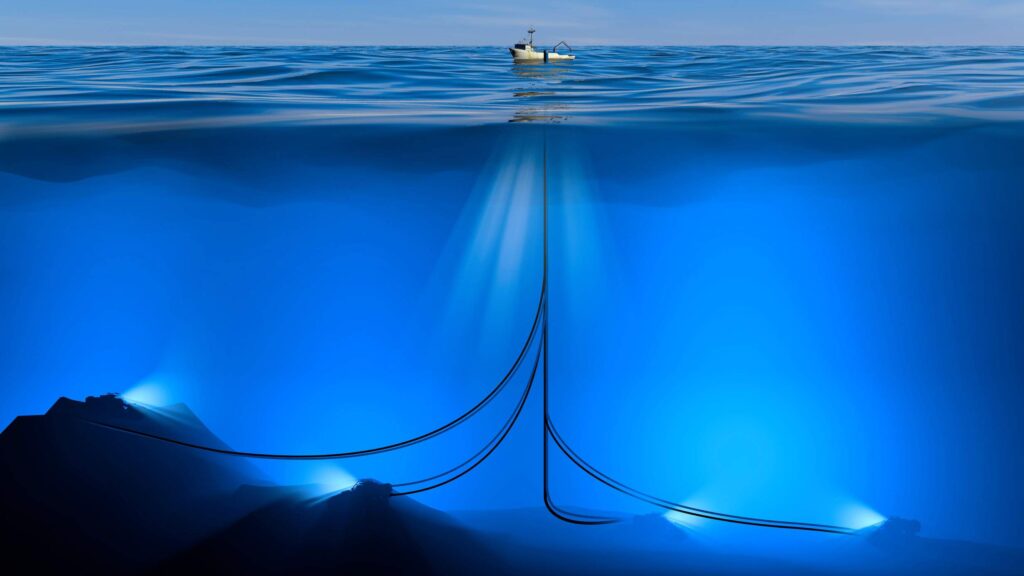
The extraction of these resources is a colossal engineering undertaking. The business models entail using extremely heavy mining machines that are often heavier than a blue whale, right on the delicate seabed floor.
1. Seabed Mining: Depth: 4,000 meters.
The heavy and remotely operated crawler bots scour or suck out the top layers of the sea floor sediment to extract polymetallic nodules and pulverize the volcanic crust.
2. Vertical Pipe Lift: From within the water column.
These rock fragments, along with the sediments and marine life forms, are crushed into slurry and conveyed through thousands of feet of vertically oriented pipe systems to the surface production facility.
3. Resource Extraction: On board the surface ship.
The slurry is filtered in the surface vessel, where the minerals are extracted from the mixture of liquid and sediment.
4. Midwater Dumping: Discharge of waste.
The cold wastewater, carrying pulverized rock particles and other chemicals, is returned to the midwater column via vertical piping systems.
3. The Environmental Dilemma: Irreversible Ecological Damage
One of the most important reasons for the huge debate on deep sea mining is because it endangers an ecosystem which we know little about. Marine biologists claim that nearly 90 percent of the species that can be found deep into the ocean were not even known before.
Habitat Destruction and Slow Recovery
It will cause havoc in the area, which might continue for hundreds of years because of the mark made on the bottom by these mining machines. The deep sea environment is known to be extremely cold and low on nutrients. In a computer-generated simulation of deep-sea mining conducted some decades ago, when the process was replicated much later, it was found that the tracks left by these machines were absolutely the same and the local environment had not recovered from it at all.
The Threat of Toxic Sediment Plumes
In addition to the sediment trail left behind by the mining treads, there are also massive clouds of sediment caused by the mining operation itself. The mass scraping of the sea floor creates a plume of sediment which spreads for miles.
The dumping of waste slurries created on board the surface ship leads to midwater plumes. They are responsible for burying the filter feeders and blinding the deep-sea fish which rely on bioluminescence for sustenance, and depositing heavy metals directly into the food chain.
The Connection To Climate Change: The deep oceans act as the largest carbon sink on earth and are responsible for absorbing about 40 percent of carbon dioxide emissions made by humans. There are theories which show that disturbing the marine sediments may hinder the biological carbon pump system and thereby cause excessive carbon dioxide emissions.
4. Geopolitics and Regulation: The Battle for the Seabed
The management of international water is the responsibility of the International Seabed Authority (ISA). The ISA has the mandate to fulfill a highly contradictory role of managing all activities related to mineral extraction from the international seabed while at the same time protecting the marine environment effectively.
| Dynamic | Key Drivers & Perspectives |
| Pro-Mining Coalition | Motivated by corporations and countries trying to gain control over the supply chain of EV batteries and weapons systems without using land-based monopolies. |
| The Moratorium Movement | This movement is supported by a group of researchers from around the world, the peoples of the Pacific and more than twenty countries. These countries are saying that we should not do anything until we know for sure that it is safe for the environment. The Pacific peoples and these countries are asking for a moratorium. The moratorium on this thing is what the indigenous peoples of the Pacific and the countries are calling for until we can verify the risks of this thing. |
| Corporate Pushback | Big companies like Google and car makers such as BMW and Volvo are making a choice to avoid minerals from the ocean. They want to focus on recycling things so they can reuse them. This way Google and these car companies, including BMW and Volvo are helping to create a system where things get recycled and reused which’s good, for the earth. |
Summary: A Choice for the Future of the Planet
When you think about all the things we have found at the bottom of the ocean it is clear that we should not use the ocean depths to make money. The ocean depths are a part of an important ecosystem that does a very important job for our planet. The ocean has a lot of things like minerals that are worth a lot of money and we cannot ignore this.. It is possible that taking these things out of the ocean will hurt the environment more than it helps us. As people keep making technology we will have to make a choice about what to do with the ocean depths. We have to decide if we want to see the ocean depths as a place to get resources or as a wild place that we should leave alone. The ocean depths are a part of the ecosystem and we have to think carefully about what we do, with them.