The lifecycle of stars explained in common known terms. In this article study how stars are born, live and die. From nebulae to dwarfs, neutron stars and black holes.
Introduction
When you look up at the night sky you see points of light. Each one is a star. Every star has its story. Stars are not forever. They live for a long time, like millions or billions of years and then they die. Some stars die quietly while others die in explosions. If we understand how stars are born and die, it can help us know where we come from. The iron in your blood, the calcium in your bones and the oxygen you breathe were all made inside stars that exploded a long time ago. You are really made of star stuff. This article will talk about each part of a star’s life from when it’s a cloud of cold gas to when it shines very brightly at the end.
Stars Are Born in Nebulae
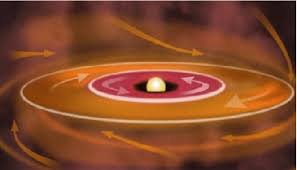
A star begins its life inside a cloud of gas and dust called a nebula. This cloud is really cold and dark. It can be very big. Sometimes it is dozens of years across. The gas and dust in the cloud start to come together because of gravity. As they get together they form clumps. When a clump gets really dense its own gravity gets stronger. It pulls in gas and dust from the cloud around it. We call this clump a protostar. Over a time, the protostar gets really hot and dense in the middle. The star gets hotter and hotter at its core. Eventually, the star gets so hot that there is much pressure that the hydrogen gas starts to turn into helium gas. This makes a lot of energy. The star is born. When the helium gas starts to form the star starts to shine. It keeps on shining because of the star’s fusion, which is the process that makes the stars energy. This process is what makes the star a star.
The Main Sequence Is a Star’s Stable Life
When a star starts to fuse things, it gets into the part of its life, which is called the main sequence stage. At this point the star is very balanced. The force of gravity is pulling inward on the star trying to make it collapse. The energy that comes from fusion is pushing outward trying to make the star explode. The longer a star lives the slower it uses up its fuel.
Stars that’re very big use up their fuel very quickly so they only live for a few million years. Stars that are small use up their fuel slowly so they can live for a very long time like trillions of years. The smaller star will live longer than the star.
A Star’s Mass Determines Its Fate
The lifecycle of stars is really about the mass of the star. When a star is born its mass is what decides everything. This includes how hot the star burns, how long the star lives and what happens to the star when it dies.
If we look at low-mass stars which’re stars that have less than about eight times the mass of our Sun these stars die really peaceful deaths. On the other hand, high-mass stars, which are stars that have more than eight times the mass of our Sun, die really violent deaths.
The mass of a star also determines what color the star is. Stars that are really hot. They look blue. Stars that are smaller burn cooler and they look red. The massive stars are incredibly bright. They are a million times brighter than our Sun. They do not live very long, only a few million years.
The smallest stars, which are called dwarfs, are really dim. They will live forever. They will outlive the universe as we know it. The lifecycle of stars is pretty amazing when you think about it. It is all because of the mass of the star. Stars are really interesting. The mass of a star is what makes each star unique.
When a Low-Mass Star Runs Out of Fuel
When our Sun runs out of hydrogen in its core it stops fusing. Gravity takes over. Start squeezing the core. The core gets smaller and hotter while the outer parts expand a lot. The star turns into a giant. Our Sun will one day and it will swallow Mercury, Venus and maybe Earth.
The Quiet Death: White Dwarfs
When a low-mass star gets rid of its layers what is left is the dense core of the star. This core that is left over is called a dwarf. This is what will happen to our Sun. It will become a dwarf. Then it will fade away. Our Sun will eventually become a dwarf. This is the end that our Sun will meet.
The Violent Death: Supernova
Stars that’re really big die in a very different way. When a big star runs out of fuel the core made of iron inside it collapses faster in less than one second. Then the core bounces back. This thing sends a shockwave moving outward. It blows the star apart in an explosion called a supernova.
A supernova is really something. For a time like weeks or months one supernova can shine brighter than a galaxy. This galaxy has billions of stars. The supernova is so bright it can outshine all these stars.
This big explosion makes elements like gold and silver and uranium. It throws them all over space. Every single gold ring that you have ever seen was made in a supernova explosion. The supernova has so much energy that it can make new stars start to form from clouds of gas that are nearby. The supernova is really powerful.
Neutron Stars and Black Holes
When a big star explodes something is left behind. This thing that is left behind is very interesting. If the star that blew up was around eight to twenty times bigger than our Sun, the middle part of the star gets crushed. It gets crushed into a neutron star.
The neutron star is really dense. The density of the neutron star is what makes it so special. The neutron star is what is left behind after the big star explodes. It has the amount of stuff as our Sun but it is only about twelve miles across. That is crazy small.
If you took a spoonful of stuff from a neutron star it would weigh a lot, billions and billions of tons. Neutron stars also spin around fast. Send out beams of radiation kind of like a big lighthouse in space.
If the star that exploded was then twenty times bigger than our Sun then it is a different story. The middle part of the star gets crushed so much that it becomes a black hole. A black hole is a place where gravity’s so strong that nothing can get out, not even light. Neutron stars and black holes are both things that come from big
stars that have blown up.
Conclusion:
As we know, the example of stars is really the story of the universe. These stars originate from clouds of gas and dust. They live for a time burning hydrogen into helium. What happens to stars depends on how big they’re. Small stars get old and become giants, then they become dwarfs, and finally they become cold black dwarfs. Big stars die in an explosion called a supernova. When this happens, it leaves behind either a neutron star or a black hole.
Everything in your body was made inside a star that lived a long time ago, before our Sun and planets were even made. Every time you look up at the stars at night, remember that you are looking at where you came from. You are looking at the stars. This is your story. Stars are a part of who we’re where we come from.