Friedrich Nietzsche changed Western thought forever when he declared “God is dead.” Here is what he actually meant and why it still matters today.
Friedrich Nietzsche: The Philosopher Who Declared “God Is Dead”
Friedrich Nietzsche has fascinated, caused outrage, and confused many people for centuries with his challenging and often unsettling ideas. He viewed religion, ethics and culture as subjects to be critically examined, and created ideas which continue to resonate in the contemporary world. Examples of Nietzsche’s impact include the statement he is most remembered for, “God is dead”, which has been recorded, misrecorded, and debated by thinkers for decades. However, what did Nietzsche actually mean? In addition, how does he or she continue to be important in the contemporary world?
The Theological Background of the Philosopher. In 1844, Friedrich Nietzsche (pronounced “NEE-chuh”) was born in Röcken, which was then a small three-street village in what is today known as Germany. He was raised by a very devout Lutheran family and at one time, it appeared that he would enter the religious vocation.
However, as he grew older, his faith began to erode. Instead of following the path of religion, Nietzsche turned to classical philology—the study of ancient texts—and later philosophy.
He became a professor at the remarkably young age of 24 at the University of Basel. Yet his academic career was short-lived. Chronic health issues forced him to resign, after which he lived a largely solitary life, traveling across Europe and writing his most influential works. His later years were marked by mental collapse, and he spent the final decade of his life under care until his death in 1900.
Despite personal struggles, Nietzsche’s intellectual output was immense. Works like Thus Spoke Zarathustra, Beyond Good and Evil, and The Gay Science However, as he grew older, his faith began to erode. Instead of following the path of religion, Nietzsche turned to classical philology—the study of ancient texts—and later philosophy.
At just 24, the individual earned the right to call himself a professor at the University of Basel but soon left academia due to chronic health problems. For years afterward, he lived an almost hermit-like existence, travelling around Europe and producing some of his best-known writing during that time. However, near the end of his life, the individual experienced severe mental decline and required care for the last years of his life until he died in 1900.
Despite personal struggles, Nietzsche’s intellectual output was immense. Works like Thus Spoke Zarathustra, Beyond Good and Evil, and The Gay Science laid the groundwork for many modern philosophical movements.
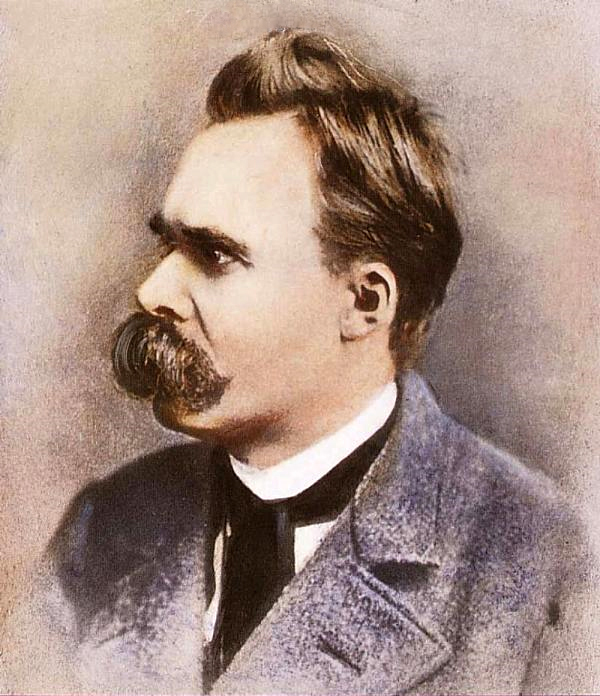
“God Is Dead”: A Radical Declaration
Nietzsche’s proclamation that “God is dead” is found primarily in his work The Gay Science and also in Thus Spoke Zarathustra. On the surface, he seems to be stating simply that he has rejected god/religion; however, this declaration carries a far deeper meaning.
His assertion wasn’t so much that God is not real but rather that the idea of God—and all of the value systems associated with God’s existence—are decreasing in credibility within Western Civilization. The idea of God has been usurped by science, reason and modern civilization. For this reason, having coined the phrase “God is dead,” it was more of a comment about the current state of all people (w/ God) than it was about there being no God.
Nietzsche saw this as both a crisis and an opportunity. The decline of religious belief meant that traditional moral frameworks were also collapsing.
One of Nietzsche’s greatest concerns was the rise of nihilism—the belief that life has no inherent meaning or value. If God is dead, then what gives life purpose? What guides human behavior?
According to Nietzsche, a great many people will discard all hope of finding meaning in their existence due to the lack of any sort of divine order in the universe. He identified this development as a critical juncture in the evolution of humanity. Nevertheless, he did not advocate capitulation to the nihilistic tendency. Nietzsche, instead, calls upon people to meet nihilism head-on and progress past it.
For Nietzsche, the “death of God” forced humanity to take responsibility for creating its own values. This was not an easy task, but it was, in his view, necessary for true freedom.
The Übermensch: Creating New Values
To deal with the problem of meaning Friedrich Nietzsche introduced the concept of the Übermensch, which is often translated as the “Overman” or “Superman”. The Übermensch is an idea in his book Thus Spoke Zarathustra.
The Übermensch is not a being but rather a symbolic figure that represents the individual who creates their own values and lives in a genuine way. This person does not rely on what society thinks or what religion says. Instead defines their own purpose and fully embraces life, even the tough parts.
Friedrich Nietzsche believed that most people are happy to follow the crowd doing what everyone else does without questioning it. The Übermensch on the hand stands out from the crowd willing to challenge the norms and take responsibility for their own life.
Friedrich Nietzsche was very critical of what he called “slave morality” which’s a system of values based on being humble, obedient and denying oneself.
He associated this with ethics, which he thought glorified weakness and held people back from reaching their full potential.
In his works, such as Beyond Good and Evil Friedrich Nietzsche argued that morality is not absolute but something that people create. He made a distinction between “master morality” which values strength, power and creativity and “slave morality” which comes from resentment and emphasizes equality and submission.
This critique of morality is still controversial today. Some people think that Friedrich Nietzsches ideas can be seen as promoting elitism or even cruelty. However many scholars believe that his goal was not to encourage oppression but to challenge people to think for themselves and strive for self-improvement.
Friedrich Nietzsche’s philosophy has often been misunderstood with serious consequences. In the century his ideas were misused by political movements most notably by the Nazis. However this interpretation is widely regarded as a distortion of his work.
Friedrich Nietzsche himself was critical of nationalism, -semitism and authoritarianism. His philosophy was deeply individualistic emphasizing freedom and creativity rather than collective ideology.
Part of the confusion comes from his writing style. Friedrich Nietzsche often used sayings, metaphors and provocative language which can be open to interpretation. His work invites readers to think rather than just accepting fixed conclusions.
Despite the controversies Friedrich Nietzsche’s influence on thought is undeniable. His ideas have shaped existentialism, postmodernism, psychology and literature. Thinkers like Jean-Paul Sartre and Albert Camus dealt with themes of meaning and absurdity that’re similar to Friedrich Nietzsche’s concerns.
In psychology Sigmund Freud acknowledged Friedrich Nietzsche’s insights into motivation and the unconscious. In literature many writers have drawn on his exploration of individuality and rebellion.
Today Friedrich Nietzsche’s question remains relevant: how do we find meaning in a world where traditional certainties are fading?
Why Friedrich Nietzsche Still Matters
In the century many societies are going through the kind of cultural shift that Friedrich Nietzsche described. Religious belief is declining in some parts of the world while scientific and technological advancements are changing our understanding of reality.
This raises the challenges that Friedrich Nietzsche identified. Without a shared framework how do we define right and wrong? How do we create purpose in our lives?
Friedrich Nietzsche does not offer answers. Instead he demands that we confront these questions directly. His philosophy encourages self-reflection, creativity and courage. The willingness to face uncertainty and still affirm life. Friedrich Nietzsche was not a critic of religion; he was a thinker deeply concerned with the future of humanity. His declaration that “God is dead” was a warning much as it was an observation. A call to recognize the shifting foundations of society.
Then leaving us in despair Friedrich Nietzsche challenges us to rise to the occasion. In a world without guaranteed meaning he invites us to become creators of our values shaping our lives with intention and authenticity.
Then a century after his death, Friedrich Nietzsche’s ideas continue to provoke, inspire, and unsettle. Whether one agrees with him or not engaging with his philosophy is an invitation to think deeply about what it means to live. And to live well.