Can humans live on Mars? The answer is not simple.
Here are the main reasons why Mars is not ready for humans yet:
The planet’s atmosphere is too thin. The temperature is very low. There is no air. We need to find a way to grow food.
Introduction
People have been thinking about Mars for some time. They really want to visit Mars. It has been a dream for years. Mars is a planet that people are very interested, in. If you think about it, it makes sense. You can see it easily up in the night sky.
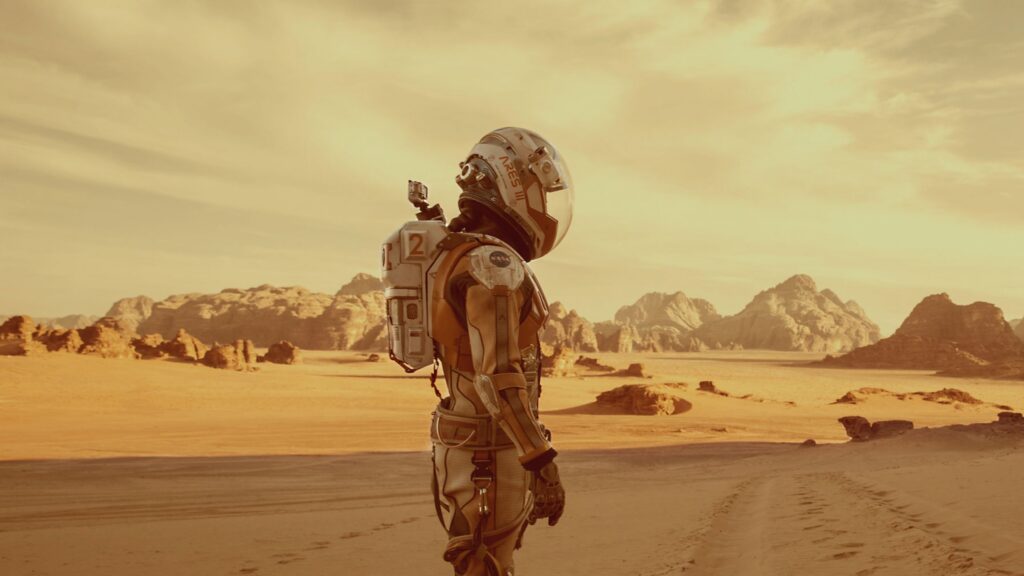
Plus, it feels kind of like Earth but is still super mysterious. Books and movies always show astronauts doing things like building big glass domes, planting flags, etc. But the thing is, just visiting Mars isn’t really the main issue anymore. We will probably go there for a quick trip sometime in the next two decades. The actual big question is if humans can stay and live on the red planet permanently.
A lot of people think Mars is pretty much just a colder and drier version of Earth. But it’s really not. Mars is incredibly dangerous. It is actively trying to kill you in ways most people don’t even get. So, this paper is going to look at the main reasons why living on Mars is totally impossible right now. We will also look at what things would need to change first.
The Atmosphere Is Almost Nonexistent
The Earth’s atmosphere is a thick blanket of nitrogen and oxygen, which protects us from space radiation, holds in heat, and provides the air we breathe. Mars’ atmosphere is less than one percent as dense as the Earth’s. It is mainly made up of carbon dioxide, and there is very little oxygen. You can’t breathe it in for a second. The low pressure also means that at normal body temperature, your blood would boil. This isn’t science fiction; it is basic physics. No heavy pressurized suit, no reliable oxygen supply – you’d die in seconds. Any Martian colony would have to exist totally within sealed habitats.
The Cold Is Relentless
Mars is freezing! When it is summer near the equator the days can get a warm but the temperature on Mars still does not get close to the freezing point. The temperature on Mars is always very cold even when it is summer, on Mars. If you compare that to Antartica, the average temperature is really mild! Providing heat for a Martian habitat is an energy-expensive proposition. An example of this would be if there was a leak or crack in your wall; your walls could freeze instantly causing instant death. The cold is not only a hazard for human, but also makes mechanical and electrical devices weak and unreliable. To live on Mars we need to be continually fighting against the environment.
Radiation Levels Are Dangerous
The Earth has a field that helps keep us safe, from bad things coming from space. A long time ago Mars did not have this protection anymore because it lost its own magnetic field. The Earths magnetic field is still. It deflects most of the cosmic and solar radiation that comes our way. Mars is not that lucky because it lost its magnetic field over billions of years ago.
Today, Mars receives forty-five times more radiation than Earth. A trip to Mars that lasts for six months will give an astronaut about the amount of radiation that a person who works with nuclear things gets in their whole career. If you live on Mars for a time like a few years it can really increase your chance of getting cancer. It can also hurt the part of your nervous system and mess up your DNA. Living on Mars for years is a problem because it can cause a lot of damage to your body and the main issue is the radiation, from Mars. Homes would need thick walls made of Martian soil or water to block radiation. Even with this protection, long-term settlers would face serious consequences.
Water Exists but Is Hard to Access
Mars has water ice at its poles and below the surface at mid-latitudes. That is the good news about Mars. The bad news about Mars is that we need to use machines and a lot of energy to get the water ice from Mars melt it and make it safe to use. The water on Mars is mixed with bad things like perchlorates, which can be bad, for the thyroid when we drink the water from Mars. Any water obtained from Mars’ ice will need to be thoroughly filtered. Losing the recycling system of water would mean death in just a few days.
Soil Is Toxic to Plants and Humans
Soil on Mars is very different from Earths soil. Mars soil has perchlorates and these perchlorates are bad, for humans. Perchlorates in soil can make potatoes poisonous just like in the movie The Martian. Eating those potatoes can make you sick because they have perchlorates in them. The soil, on Mars does not have the stuff that plants need to grow. This means plants have a time growing in Martian soil. The soil on Mars is also very dusty with particles. This dust can cause breathing problems, for humans and damage equipment. To build a greenhouse on Mars we would need to either bring in soil from elsewhere or clean and treat the soil.
The Martian soil needs to be washed and treated to be used for growing plants. Farming on Mars isn’t impossible, but it certainly presents many challenges beyond the average person’s perception of what that might be.
Dust Storms Can Last for Months
Mars dust storms are a deal. They can last for weeks or even months. Cover the whole planet. The wind from the storm is not strong enough to knock over things. The dust is a major problem. It gets everywhere. Into seals, joints, electronics and even lungs. Dust is a problem. It sticks to everything because of the electricity in the air. When we have a dust storm the solar panels that make electricity get completely covered in dust. This means the solar panels stop working. We do not get any electricity from the solar panels. The dust on the panels is a big issue, for the solar panels.This is an issue, for a colony that relies on solar energy. If the storm lasts a month the colony could die. In that case they would need to use power instead. Nuclear power adds more complexity and weight to the colonys structure.
Distance Makes Rescue Impossible
Earth and Mars are on average, one hundred forty million miles apart. A one-way radio message takes between four and twenty-four minutes depending on planetary alignment. You can’t talk to anyone. It could take months for a rescue mission to launch and arrive. If there is a medical emergency on Mars, you are on your own. If you find an area where your habitat has leaking water, you fix it yourself or die. There is no helpline. We are not physically separated; we are psychologically isolated. Even the best trained astronauts would have trouble with years of total separation from Earth.
Conclusion
So can humans live on Mars? No. It will not be for a while. The thing is Mars has no air and that is a problem for humans. Mars also has a lot of radiation which’s bad for humans. The soil on Mars is poisonous. The temperatures are really freezing. The gravity on Mars is also very weak which is not good for humans. Then there are these global dust storms on Mars that can be very dangerous.. On Mars there is no way to protect yourself from all these things because of the distance from Earth and the distance between things, on Mars.These are not inconvenient problems. But we should keep trying, Mars exploration is still worthwhile. But the honest answer to whether humans can live on Mars is no. We may visit. We may even build small research stations. But living permanently there is a challenge beyond anything human has attempted.